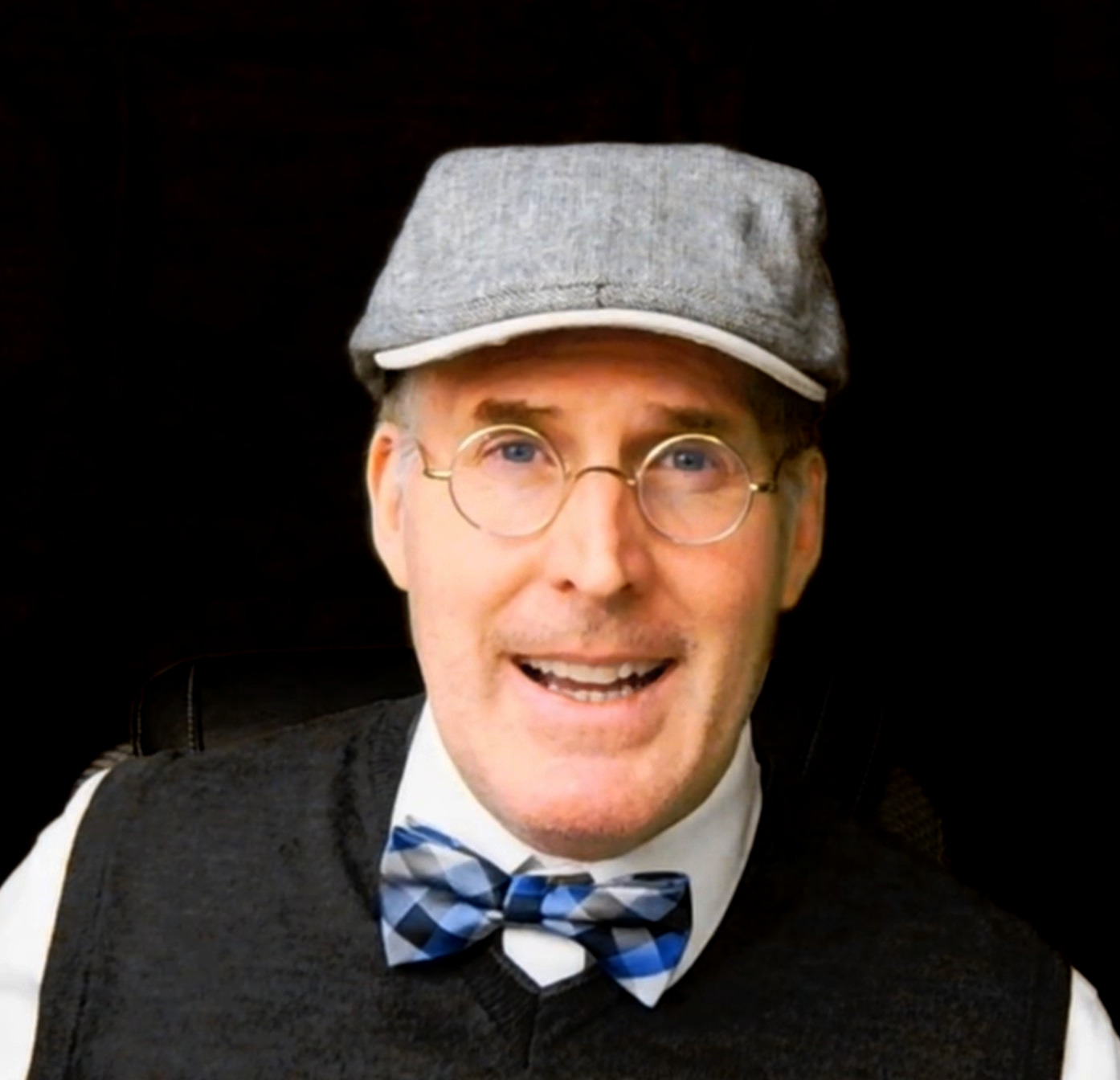
W. Brown Morton's presentation
This page contains the 2011 presentation of of W. Brown Morton’s “Beyond History — Success and Failure in Preservation” given at Christ Church, Philadelphia, as part of the “Carpenter’s Company 2011 Master Builder Dialogues, Preserving America” sponsored by the National Park Service, Drexel University, and Goodwin College.
The video, linked below, and its transcript were taken from a publicly available video on on YouTube that was uploaded by the National Center for Preservation Technology and Training (NCPTT), a federal, public agency. The video was publicly available from 2011 to mid 2026, but NCPTT has since made the video private, which is why it is referenced here. The video and transcript are made available only for educational fair use / public domain archiving for non-profit scholarly research and commentary.
Transcript of Transcript of W. Brown Morton’s 2011 presentation “Beyond History — Success and Failure in Preservation”
Introduction by Charles Cook, R.S. Cook and Associates, Inc.
Brown Morton has traveled the world. If you've looked, and as you know I don't read the resumes and all, but if you look at his resume, you'll see that he's traveled the world and basically done it all.
When we first contacted Brown, his enthusiasm for what we were doing was only surpassed by the enthusiasm he has for a very special project he's going to talk to you about today. A project that may ... And it's close to home, may center in Baltimore, but I think if we take it all to our hearts, it's going to be a very special message for all of us to leave today with a new mission, a new view toward preservation.
Brown, do you want to ...
Brown Morton’s presentation
Good morning everybody. I have to say I feel right at home here. I'd like to thank the Carpenter's Company, and Drexel University, and the National Park Service for sponsoring this important master builder dialogue, and for inviting me to be part of this discussion about preserving America.
I must confess that I come here today as a wolf in aging sheep's clothing. I come here today to try to change the way you and I think about historic preservation. I come here today to try to change the way we speak about historic preservation, and I come here today to try to change the way we might work together to achieve a worthy goal.
My brief today is simply this: I think we must reevaluate the successes and failures of historic preservation as we know it, and to recast our work, not solely as an exercise in preserving the past, but as an indispensable partner with others in building a healthy future by building healthy citizens.Historic preservation is not an end in itself. It is a means to an end, and for me that end is successful human development.
Right now I'm completing a manuscript with my friend, Eric Holcomb, from Baltimore, which we hope to publish next year, and the book is titled Beyond History, The Future of Historic Preservation. In it we are trying to demonstrate that good places grow good people, and that historic preservation is an essential part of that.
Now, to step back a bit, I have this to say. In our fragile world, a harsh, unchanging truth is that everything is changing always and everywhere.Nothing is permanent in creation, except change itself. You and I frequently have thought of ourselves as people whose job is to stop the clock, and to freeze frame things. I have come to see that is, first of all, impossible, and secondly, leads us down the gentle path to fakery.
The second century Roman Emperor Marcus Aurelius commented in his meditations, “One thing hastens into being. Another hastens out of it. Even while a thing is in the act of coming into existence, some part of it has already ceased to be. Flux and change,” he went on to say, “Are forever renewing the fabric of the universe, just as the ceaseless sweep of time is forever renewing the fact of eternity. In such a running river,” he asks, “Where there is no firm foothold, what is there for a man to value among all the many things that are racing past him?” End of quote.
I believe that the question asked by Marcus Aurelius more than eighteen hundred years ago is as relevant today as it was then. In such a running river, where there is no firm foothold, what is there to value among all the many things that are racing past us?
In this running river we call the year 2011, where many people question if any firm footholds remain on the slippery slope of our new millennium, where many ask what is there for us to value among all the many things that are racing past us? What is our answer? Do we have an answer?
If so, is our answer an honest, clear, and convincing answer that can win the allegiance and support of the citizens and the people of the United States, and indeed the allegiance and support of folks all around the world.
In short, what do we value, and most importantly, why, and for whom?
Now, what does historic preservation have to do with this question? Several years ago I noticed that there was no formal definition of the term historic preservation. Many groups and organizations listed goals and objectives for historic preservation, but none had defined the term.
Now, as many of you know, I taught architectural conservation for over two decades at the University of Mary Washington in Fredericksburg, Virginia, and a while back some of our students conducted an entirely unscientific exit poll of shoppers as the shoppers left our local supermarket. The student asked individuals, "What do you think historic preservation is?" Most people said preserving the past. Now, one inventive soul pondered a moment, and looked up and said, "I think historic preservation is a type of unleaded gasoline.” I disagreed with both answers and developed my own definition. Here it is.
Historic preservation is the dynamic and deliberate process through which we decide what to keep from the present for the future, and then work to keep it. You'll notice the word past is nowhere in my definition.
I believe that historic preservation is a process, because it is a beginning, but should have no end. It is dynamic in that it is always in motion, and always changing, and it is deliberate in that it is thoughtful and intentional. It is a process through which we decide what to keep from the present for the future.
Now, deciding what to keep is always a value judgment, and one that takes us straight back to Marcus Aurelius.
I have long maintained that historic preservation is, if you will, an autobiographical undertaking. That we paint a picture of ourselves by what we choose to preserve and why. I disagree with the most common definition of historic preservation offered by our Virginia shoppers that historic preservation is preserving the past. I disagree, because I do not believe we can preserve the past. The past when it was present was a multi-dimensional reality, a rainbow of people, attitudes, ideas, know how, and struggles that made them them.
Today we have only the bones that yesterday left behind on our plate.
I believe that preservation must be so much more than an exercise in elegant embalming. I'm not interested in doing that. In my view, the past is past, and can never be recaptured. It is always a memory, just as the future is always an imagining.
As you may well know, there are two principle words in Greek for time, chronos and kairos, K-A-I-R-O-S. Chronos, from which we have our word chronology, is linear time. It is horizontal time, if you will. It measures sequence, one o'clock, two o'clock, Friday, Saturday, October, November, 2011, 2012. Chronos measures sequence, but it does not measure value. There's nothing intrinsically better or worse about Friday than about Saturday. Chronos is in that sense value neutral time.
Kairos, on the other hand, is circular time. It marks development and change, the life cycle of things, from inception, to childhood, to adolescence, to maturity, to old age, and to death. Kairos marks this cycle for persons, for ideas, for styles, for attitudes, for just about everything. Thus, everything and everyone is somewhere in the great circle of kairos from birth to death, including you and me. We may perceive that some stages in our own kairos, or in the kairos of our community, have more significance than others. Kairos is not value neutral.
I look at my own personal tape of my life, and there certainly are episodes I'd just as soon edit out if I could go back and have them hit the cutting room floor forever. There are other moments when I feel, "Okay. That wasn't so bad." Remember that wonderful passage from Ecclesiastes, which is all about kairos, and I quote, "To everything there is a season, and a time to every purpose under heaven."
What time is it is most often a chronos question, whereas if we ask, "I wonder if this is the right time to request my next door neighbor to make a handsome gift to maintain historic Christ Church, or should I wait for a better moment?" That is a kairos question.
Imagine linear time and circular time, and the tangent where the two touch is now. You and I are here this morning, all at the same chronos time, October 28th, 2011, but no two people in this room are exactly the same age, or hear what I am saying through exactly the same ears. We are all at different places in our own kairos. So, here we are, where the straight line of today's shared and common chronos has become tangent to the circle of your kairos and of mine.
Think about it. This moment in time is unrepeatable.
Now, we live every moment of our lives in a bubble called now. For us, it is always now. Yesterday, which was now then, is already a memory. Tomorrow, which will be now if we get there, is still a dream. Now is our only reality. This is why we cannot preserve the past. The past is gone. It is, as my children say, history, Dad. Now is the only time that anything is ever possible.
We can never experience Philadelphia as generations past experienced it. We can see Philadelphia only through the lens finder of our own experience. As hard as we might try, we cannot erase the effect of the moon landing, or of 9/11, or of I95, upon our perception of reality, and our perception of Philadelphia.
This is why I define historic preservation as deciding what to keep from the present for the future. All we have to choose from is what has survived from the past into the present moment with us. Remember, we do not wish to keep everything that has survived into the present moment. Perish the thought. Certainly not here in densely populated Philadelphia. We must make choices. We must make value judgments. We must say yes to this, and no to that. In so doing we will each become our own Marcus Aurelius, deciding what is there for us to value among all the things that are racing past us, and in so doing, we will shape the future of an ever changing America.
My friends, I believe that now is the time for some new thinking, new speaking, and new methods of getting our job done. In the United States, it seems that historic preservation thinking goes in roughly thirty year cycles. Take federal preservation legislation, for example.
We find our first piece of federal legislation in the 1906 Antiquities Act. We follow this with the 1935 Historic Sights Act, and we created our present Federal, State, and Local Preservation partnership with the 1966 National Historic Preservation Act. All of these have been good and useful legislation. However, 1966 plus thirty isn't 2011.
We are, in my view, a decade overdue for a massive overhaul of our preservation thinking.
I entered American historic preservation in early 1967, fresh from studying architectural conservation in Paris. I went to work for the Office of Archeology and Historic Preservation of the National Park Service the day it opened in response to the new programs mandated by the 1966 Act. There was an excitement in that office. We were bringing in the new Jerusalem. The National Register was new. The Advisory Council and Section 106 were new. The State Historic Preservation Offices were new.
However, I'm convinced that now is the time to rethink our presently accepted goals of historic preservation. Perhaps it's time to abandon the term historic preservation altogether, and reach for a new one that will more fully embrace the challenges and opportunities of the present moment, and clarify our shared hopes for the future. As T.S. Eliot commented in Little Gidding, last season's fruit is eaten, and the full fed beasts shall kick the empty pail, for last year's words belong to last year's language, and next year's words await another voice.
The author, Peter Bowler, in his book, crisply titled, The Superior Person's Book of Words, identifies a word that wasn't until recently unknown to me, and that's a rather dense word, euphenics. Bowler defines euphenics, as quote, "The science of improving the condition of humans, by improving their surroundings." "The science of improving the condition of humans, by improving their surroundings." In contradistinction to environmentalism, which is the science of improving the surroundings of humans by improving the human. Don't throw your trash in the street.
I understand euphenics in my own mind as an effort to encourage successful human development. The science of improving the condition of humans, by improving their surroundings. I, also, think of euphenics in my own priestly heart, as I like to put it in a sermon, helping other people burst into full bloom. I embrace euphenics as an exercise in servanthood.
For me, the undertaking we know as historic preservation only makes sense if it is understood to be the servant of a goal larger than itself, and that goal must be successful human development.
Many years ago, I was recovering from an automobile accident, and I spent several months in traction and swaddled in burn bandages without moving. Nearly immobile, I resembled a very large caterpillar in a very large chrysalis. This experience took me outside of the normal boundaries of chronos, or linear time. It made no difference if it was day or night, Monday or Tuesday, December or January. I decided to take advantage of this imposed environment to examine my inner life, while my outer body healed.
One of the exercises I undertook was to unpack my inner suitcase, and have a look of every idea, concept, belief, or prejudice that I had dragged through my life with me. I then reflected whether or not the item being examined would be useful for the rest of my journey, or if it could be left out of my inner suitcase.
Let me give you a very small example.
In reviewing what I thought, I realized that I had a prejudice against going into the supermarket of an evening near suppertime, and encountering women with large plastic curlers in their hair, and a sort of veiled scarf over it, and I wanted to walk up to them and say, "Sweetheart, when's the big moment? Could you tell me when's the big moment?" I looked at that prejudice that I had, and I thought, "That is a total waste of my time," and so I put that to one side, and I now smile at ladies in curlers.
A second exercise became an examination of what my true name before God might be. I was quite sure that Woolridge Brown Morton III, although an adequate name in traditional Virginia, was not my creator's first choice at the instance of my conception, so I scrolled various other names and words across my inner screen to see if they better fit my essential nature.Names such as Lion, or Victor. After many choices such as those had faded from the screen, having missed the mark, two words glowed against the background of my inquiry and remained. Those two words were servant and lover.
Servant in the sense of living my life to be at the service of others, and lover in the sense that I'm a builder upper, not a user upper, and these two names have stayed with me ever since, and inform my work.
I believe from my shoes up, I would say from my socks up, but I’m not wearing any today, that historic preservation must always be part of a higher and more noble goal than itself, and, as I've said, that goal is successful human development.
I want every person in this room, I want every person in Philadelphia, to have the chance to burst into full bloom as a human being. What would this take? What do you need to spread your wings and fly?
I believe that historic preservation has a role to play in this endeavor to encourage human wholeness, precisely because place, I'm convinced, has something to do with how we all turn out.
T.S. Eliot, again, in his Four Quartets, characterized a place in England called Little Gidding, as I quote, "A place where prayer has been valid." There's a very hopeful idea in that. We all know it. Place matters.
I believe there are certain environments that encourage and sustain successful human development better than others.
I believe that historic preservation in the United States has become ossified in the decades since the passage of the National Historic Preservation Act of 1966, and needs a kick in the pants to regain its earlier excitement, and reconnect people with their deepest hopes.
Many of the programs and activities engendered by the act have lost their original sense of urgency. They have become unnecessarily frozen in a bureaucratic system of regulations, criteria and standards, which have become sclerotic, pro forma, and inflexible.
What makes the possibility of change especially exciting at the present time is the growing awareness that historic preservation has moved in a very real sense beyond history, and work is no longer largely perceived as preserving the past. It is more and more understood as wisely managing change.
For me, the big, and as yet answered question is this: Can successful human development be shown to be directly related to the quality of our physical and social environment? Do human beings have a better chance of becoming robust individuals and contributing members of a community if provided with a safe and healthy environment, where in addition to clean air, clean water and no bullets, dignity is possible, privacy is possible, celebration is possible, respect for others is possible, shared remembering is possible, and the truth of the place, its history, and its appearance foster a vital sense for all of belonging to them, those who live there now?
This assumption has intellectually yet to be proved valid, and for me this is a new frontier of historic preservation.
You and I need to do together something important. To research, develop and test a simple method of analysis that uses the tools of historic preservation to help us examine our neighborhoods beyond mere history.
As I was saying, you and I need to research, develop and test a simple method of analysis that uses the tools of historic preservation to help us examine in our own communities and neighborhoods factors that are beyond mere history. To identify positive and negative influences within our communities, and then ponder with other stakeholders to provide a foundation for better decision making.
When I say stakeholders, what I have in mind are stakeholders such as urban and rural planners, public health officials, teachers, elected people. Yes, even Congressman and Senators. We need to partner more widely to gain a common goal.
Now, Eric and I are deep into this research just now as we work to develop possibly trustworthy case studies of this idea. Can you actually show that good places grow good people, that's the question, and we decided to use the wonderful melting pot of Baltimore, Maryland, which is not unlike Philadelphia in that it has spectacular successes and some spectacular failures?
The success of historic preservation in Baltimore is obvious.Just go to the inner harbor project, or go to Federal Hill, or the many other historic districts, which once were empty, and are now thriving. However, there are, also, some spectacular failures in Baltimore that we are looking at. Six of the National Register historic districts in Baltimore have vacancy and abandonment rates that exceed more than forty percent.
A case in point is Baltimore's East South Clifton Park National Registry District, which had a vacancy and abandonment rate of more than fifty-three percent in 2009. Its population has continually declined by as much as 81% in some areas of the district. Clearly, some efforts of preservation in Baltimore have worked brilliantly, and others have not.
Why not?
One major reason, which is beginning to float up to the top of our research is that it would appear that several districts were designated without the designation process being coordinated with local planning officials, and without strong resident citizen involvement.
A big question in our research is how to quantify that sustaining a successful place really does encourage successful people, or are we dreaming?
We're excited about our Baltimore study. We hope it will become a useful tool for investigation of this question in communities large or small, urban or rural, Philadelphia or Waterford, Virginia, population two hundred and fifty. We hope that the end result will be to provide people anywhere with useful tools to help plan communities in which people can burst into full bloom.
Please, help change the way we think about historic preservation.
Please, help change the way we speak about historic preservation.
Please, help change why we do historic preservation.
But let's go forward together right now.
Thank you.